
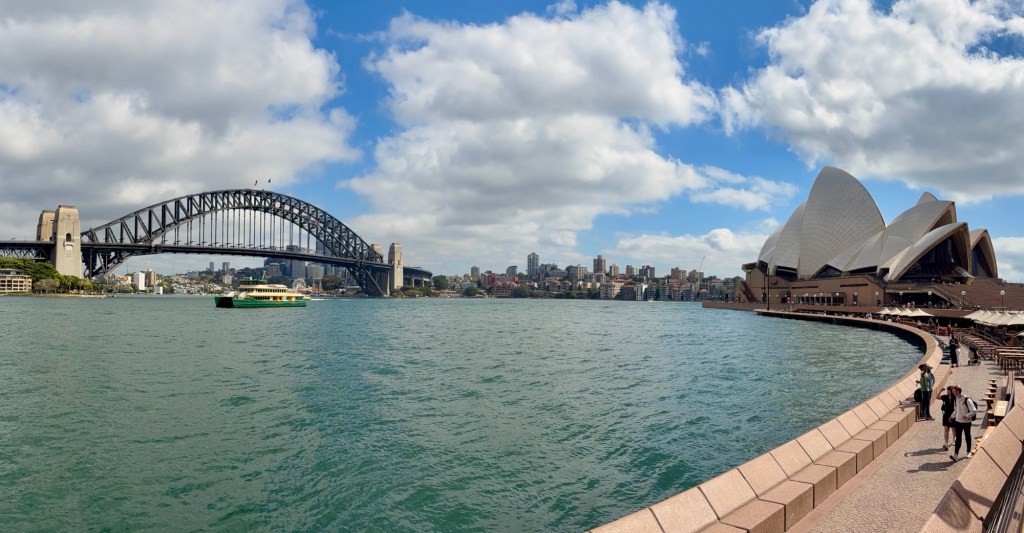
I’ve been wanting to return to Australia for many years. It’s a place that left a lasting impression on me after living and backpacking around the country in the early 2000s, when days were simpler, budgets tighter and plans often made up as you went along. Back then, Australia felt vast, wild and endlessly welcoming — and while life has moved on, the pull of the country never really faded.
Around 20 years later, this trip felt less like a holiday and more like a return. A chance to revisit places I once knew, see how others had evolved, and experience the east coast in a completely different way — swapping dorm rooms and Oz Experience buses for business class flights, boutique hotels and a slower, more considered pace.
That sense of anticipation makes even the hardest starts easier. Getting up on a cold, dark and frosty January morning in Manchester is suddenly no effort at all when you know an adventure like this lies ahead.
⸻
From Manchester to Sydney
Checking in at Manchester Airport is always easier when you’re able to use the business class queue — not something we do every time, but when you’re facing a 12-hour flight followed by a 9-hour connection, it can make all the difference. After sailing through the new security hall in Terminal 2, we headed straight to the 1903 Lounge.
It’s a lounge we’ve used many times and, while comfortable, it lacks the exclusivity of other oneworld business class lounges around the world — something made more noticeable since all airlines are currently sharing it following the closure of Terminal 1. A new dedicated lounge is rumoured to open later in the year, which should restore some balance.
I’ll cover the Cathay Pacific A350 business class experience in a standalone post, but it was a comfortable and polished way to cross continents.
⸻
Arrival in Sydney & Staying Above History
Arrival into Sydney was surprisingly smooth. Digital passport control made UK border queues feel light years behind, and within 20 minutes of landing we were in a pre-booked taxi heading into the city.
We checked into the Shangri-La Sydney, perched above The Rocks, Sydney’s oldest neighbourhood. Once home to convicts, dock workers and sailors, The Rocks narrowly escaped demolition in the 1970s thanks to community-led green bans, preserving its sandstone buildings and maritime heritage.
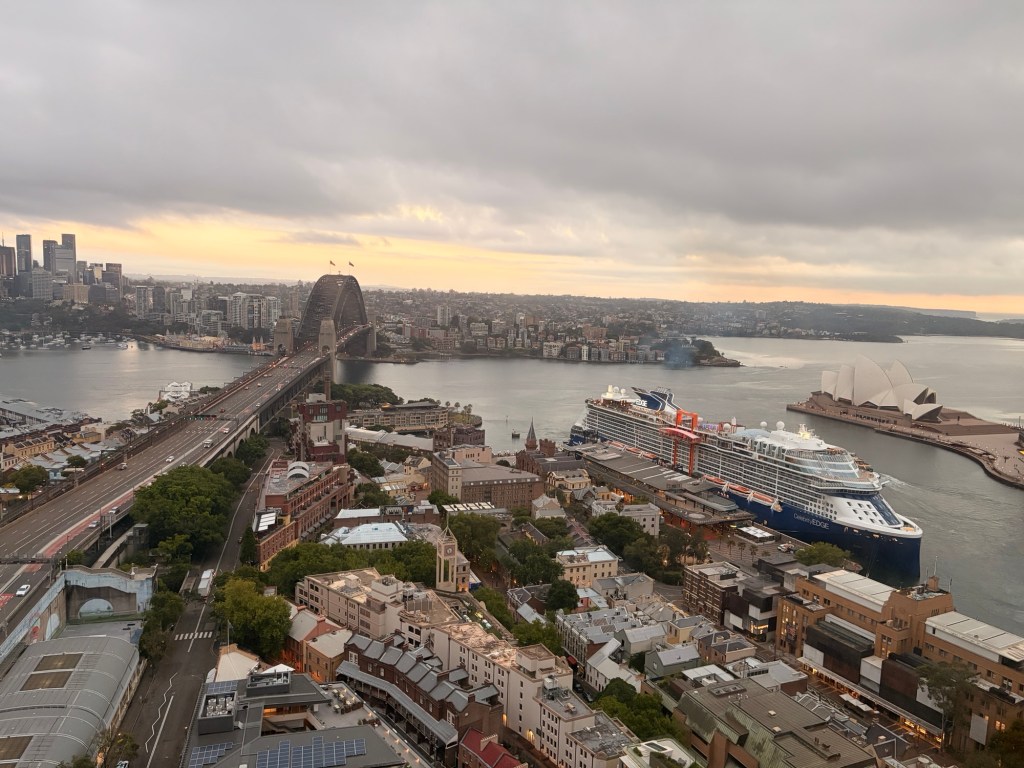
Twenty years ago, this part of Sydney meant budget pubs and hostel noticeboards. This time, it meant harbour views from above — a perfect example of how the city hasn’t changed, but my way of experiencing it has.
A late-night drink was the only thing on the agenda. Blu Bar was predictably busy, so after a quick word with the concierge we wandered down to The Glenmore, a historic pub that felt like a proper welcome back to Sydney.
⸻
Breakfast with a View & Exploring The Rocks
Jet lag delivered an early start, rewarded with iconic views of the Harbour Bridge and Opera House. Breakfast was taken in the Horizon Club Lounge, avoiding queues and offering yet another angle on the skyline.

Breakfast didn’t disappoint — soft poached eggs, fresh-ground coffee and cold-pressed juice, served with warm, attentive service. It set us up perfectly for a pre-booked walking tour of The Rocks.
Walking through the area with a guide brought its colonial and maritime history to life — convict-built warehouses, hidden laneways, former wharfs and merchant houses. Twenty years ago, I’d wandered these streets killing time between Oz Experience buses; this time, I slowed down and actually learned the stories behind them.
The tour finished at The Lord Nelson Brewery Hotel, Australia’s oldest continuously licensed pub, built in 1831. Still operating as a working brewery, it produces award-winning beers on site. A pint of Three Sheets Australian Pale Ale felt like the perfect nod to Sydney’s seafaring past.
⸻
Darling Harbour, Pitt Street & Evening Above the City
The afternoon was spent wandering Darling Harbour, with its waterfront promenades and relaxed atmosphere, before heading through Pitt Street, Sydney’s busy shopping artery.
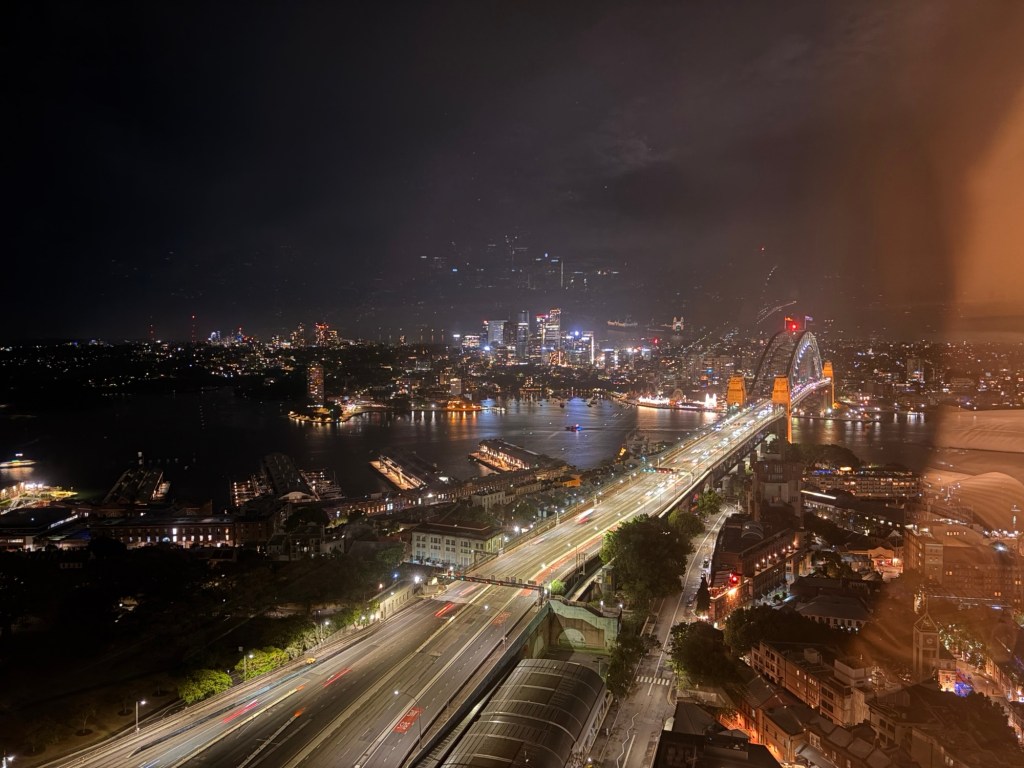
As evening fell, drinks and canapés in the Horizon Club Lounge provided a relaxed end to the day. Watching the city light up below, it was hard not to reflect on how different this felt from my first Sydney visit — same city, entirely different pace.
⸻
Across the Harbour: Taronga Zoo
The next morning began with another breakfast overlooking The Rocks — this time opting for a freshly cooked omelette — before a short walk to Circular Quay. The walk takes around 10 minutes, though the steep stairs of The Rocks make a backpack far more practical than a suitcase.
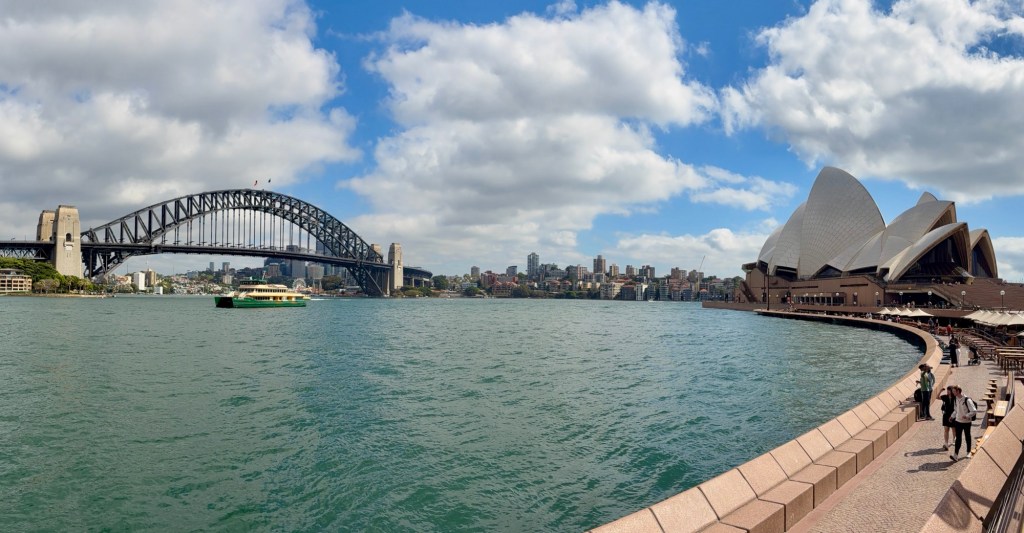
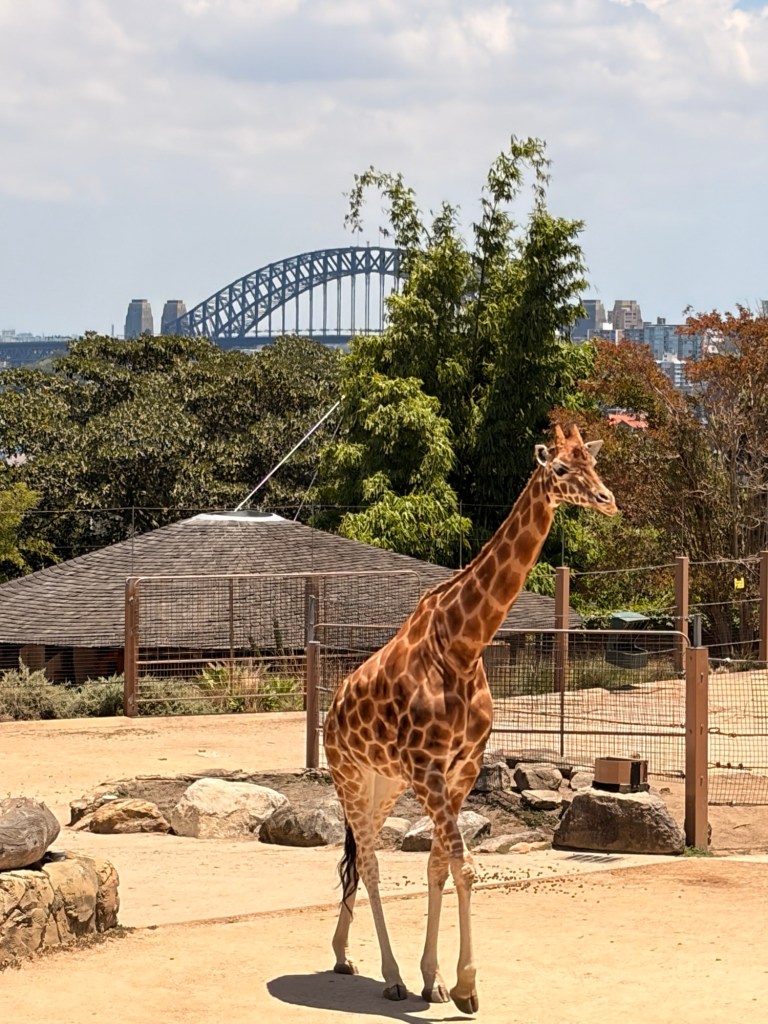
The 14-minute ferry to Taronga Zoo costs around $8.80 AUD and offers spectacular views back across the city. While we stayed at the Taronga Wildlife Retreat (covered in a separate article), Taronga Zoo itself deserves recognition.
Opened in 1916, the zoo has long been at the forefront of conservation, including a vital freshwater turtle project that helped save populations nearly wiped out by a river-borne virus.
Staying at Taronga Zoo’s Wildlife Retreat is a truly unique experience, offering a chance to sleep literally above a sanctuary of native Australian animals.
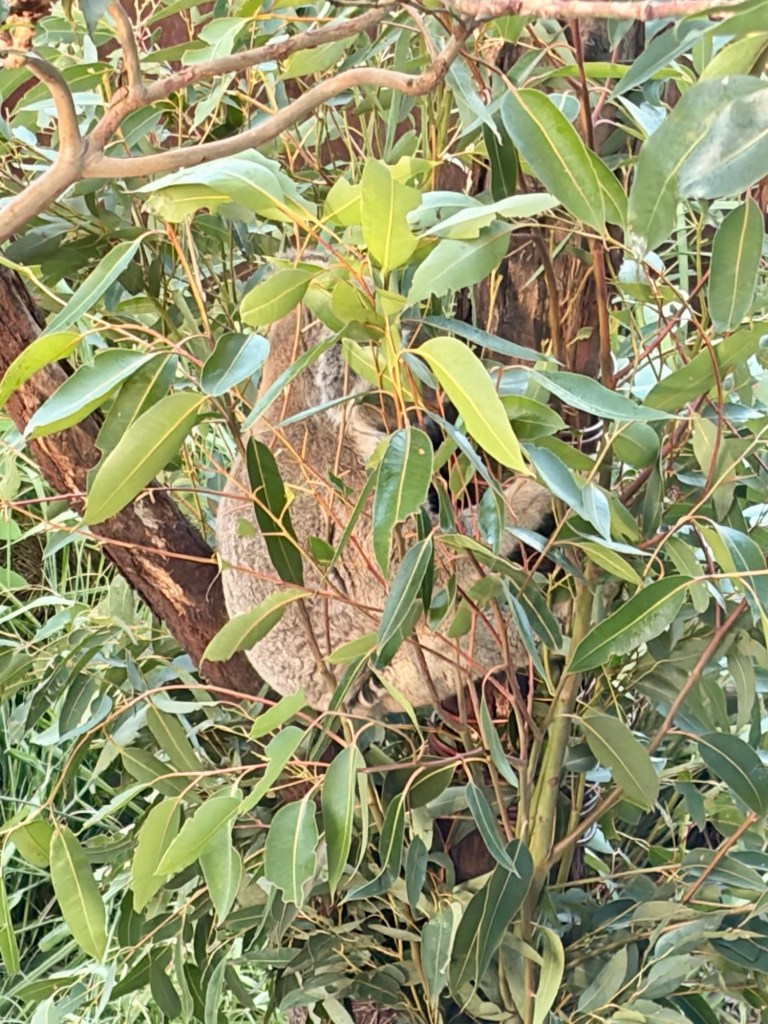
We were pleasantly surprised to wake up to a koala outside our window, with the window fully opening so they were almost within touching distance. The retreat allows guests to enjoy views of a private sanctuary, with some rooms offering glimpses of koalas, echidnas, and other native wildlife roaming nearby.
Rooms at the retreat provide exclusive access to the zoo both on the day of arrival and the following day, allowing for a relaxed, immersive experience. Guests can also book a guided sanctuary tour, learning about the animals and conservation work up close. For those looking for something extra, a night tour can be arranged, offering a rare opportunity to explore the zoo a couple of hours after it closes — just you, your group, and a guide.
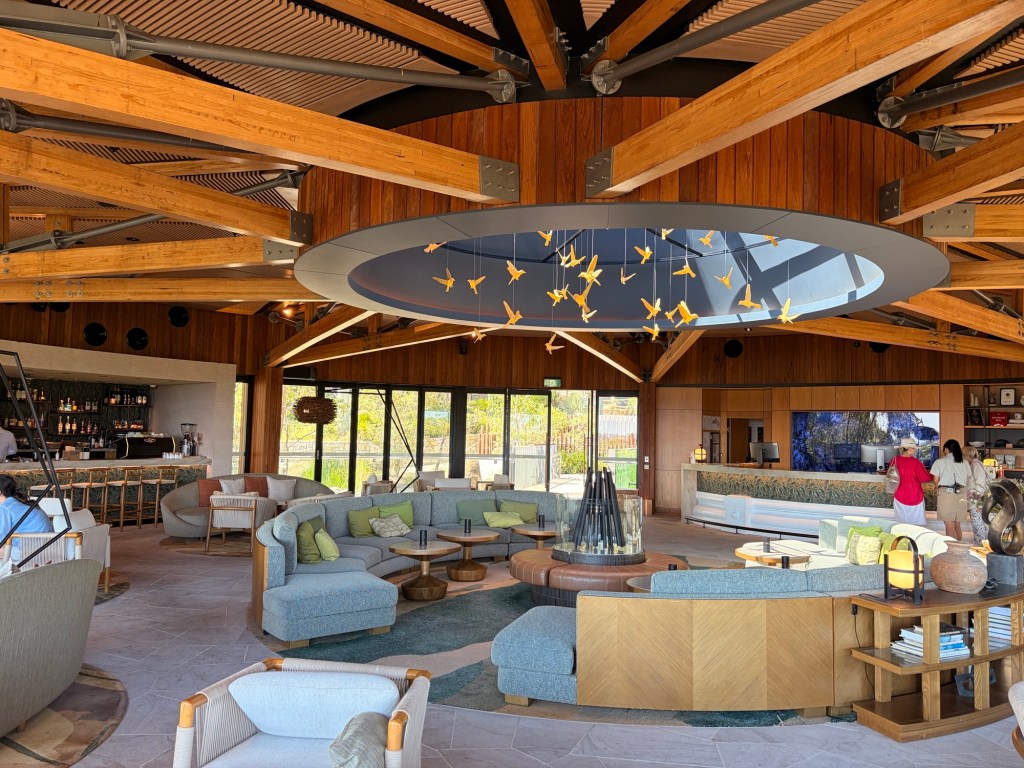
Read the full Wildlife Retreat experience here →
⸻
Sydney to Byron Bay: Northbound
After checking out, we headed to Sydney Airport Terminal 3 for a domestic flight — a refreshingly low-stress experience compared to international terminals. The Dash 8 flight to Ballina took just over an hour, with light snacks served onboard.
A pre-booked Hertz hire car awaited, and driving immediately felt familiar — Australia’s right-hand drive making the transition effortless for UK travellers.
⸻
Byron Bay: Then and Now
The drive from Ballina to Byron Bay takes around 30 minutes, winding through lush countryside before arriving in one of Australia’s most iconic beach towns.
Byron perhaps showed the biggest contrast to my Oz Experience days. Once a backpacker stop dictated by bus timetables and happy hour deals, it’s now a polished coastal resort — though beneath the gloss, the same laid-back energy remains.
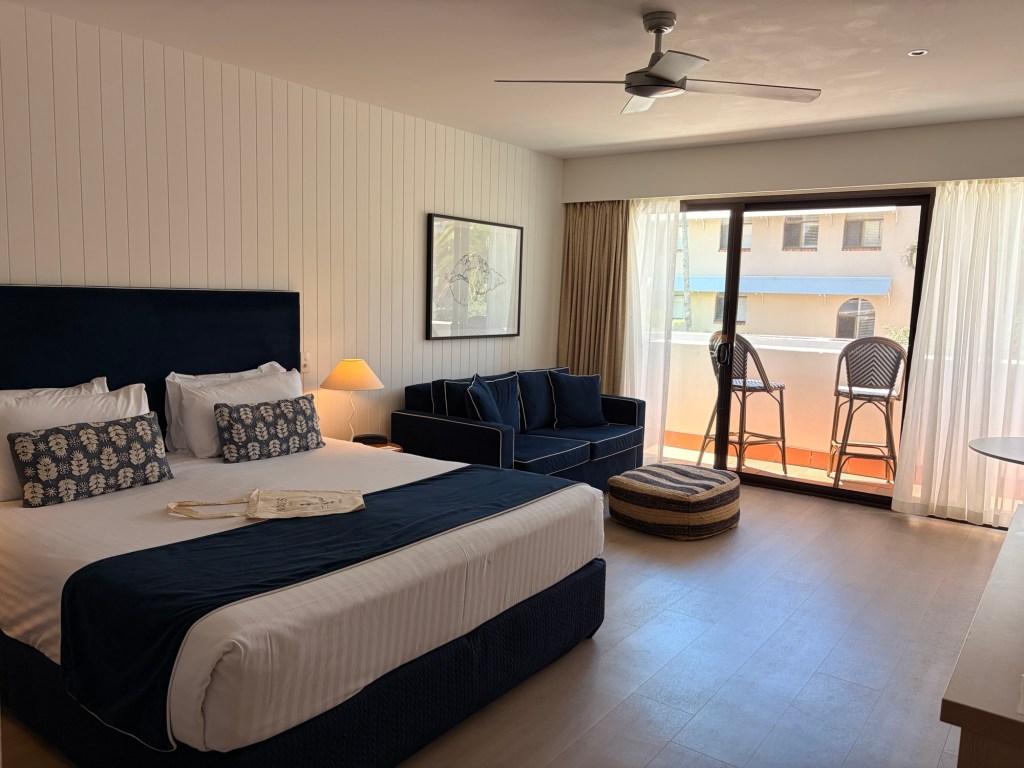
We stayed at Waves Byron Bay, practically on the beach and within walking distance of bars and restaurants. The hotel thoughtfully provides beach towels and beach chairs, making it easy to make the most of the location.
That first afternoon was spent exploring town, followed by a Stone & Wood beer — brewed just down the road. Dinner was at a small Italian restaurant opposite the hotel, serving excellent fresh pasta, arancini and wood-fired pizza. Arriving early proved wise, as queues quickly formed during the busy summer holiday period.

The next day was a full beach day — one of the only ones planned — waking to birdsong and doing very little at all.
Dinner that evening was at The Northern, a Byron institution that looks almost unchanged since my last visit over 20 years ago. Steak, chips and a glass of wine for £13 each on the daily special felt like a time capsule — and an absolute steal in modern Byron.
⸻
Road Tripping to Noosa
The following morning, we hit the road north to Noosa, a drive of around four hours — similar to Manchester to Glasgow, but with far better scenery and weather.
Driving the east coast felt like the ultimate symbol of how this trip differed from my Oz Experience days. No fixed routes, no timetables — just freedom to move at our own pace.
⸻
Noosa: Hastings Street & Australia Zoo
We parked up at 10 Hastings Street Motel, one of the few places offering on-site parking directly on Hastings Street — invaluable during peak summer when parking is scarce. Noosa itself is effortlessly stylish, with beaches on one side, national park on the other and a vibrant dining scene in between.
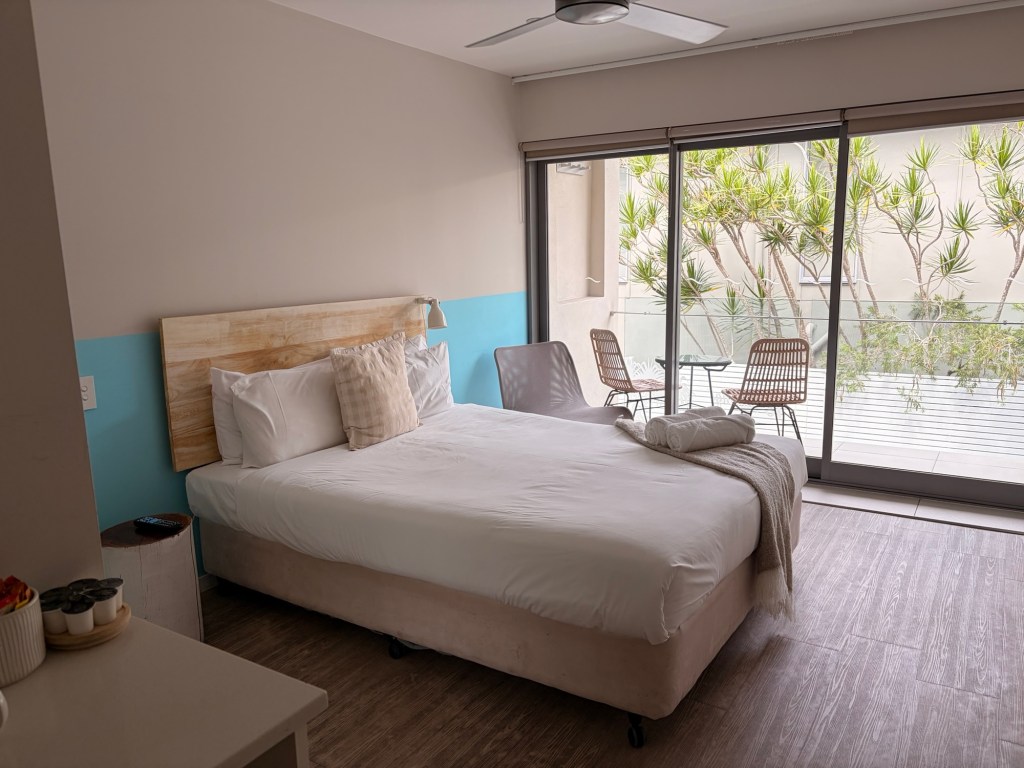
The room was basic and smaller than booked, though the owner offered free breakfast and reimbursed the price difference, which helped soften a disappointing moment.
Dinner was at Locale, a popular Hastings Street restaurant that required advance booking even for an early table (Full review here) — ideal with an early start planned.
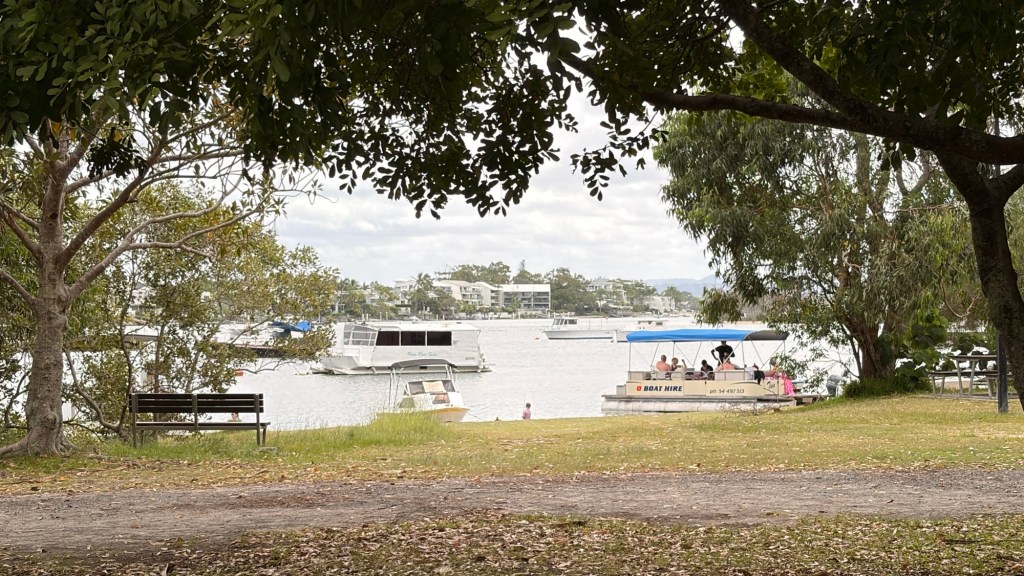
One of the main reasons for choosing Noosa was its proximity to Australia Zoo, just under an hour’s drive away. Founded by the Irwin family, it remains a powerful blend of education, conservation and unforgettable animal encounters.
A Convenient Start from Noosa
We set off early from 10 Hastings Street Motel in Noosa, taking advantage of its prime location and on-site parking — a real bonus during the busy summer holiday season. The drive to the zoo took just under an hour, a pleasant journey through lush Queensland countryside, contrasting sharply with the cityscapes of Sydney and Brisbane we’d seen earlier.
Parking was straightforward, and the early start meant we could arrive just as the zoo opened, avoiding the peak crowds that can appear later in the morning.
The Legacy of Australia Zoo
Founded in 1970 by Bob and Lyn Irwin, Australia Zoo grew from a small wildlife park into an internationally respected sanctuary, made famous by Steve Irwin, the Crocodile Hunter. Its mission combines animal conservation, education, and visitor experience, creating a space where wildlife thrives and the public can engage meaningfully with the animals.
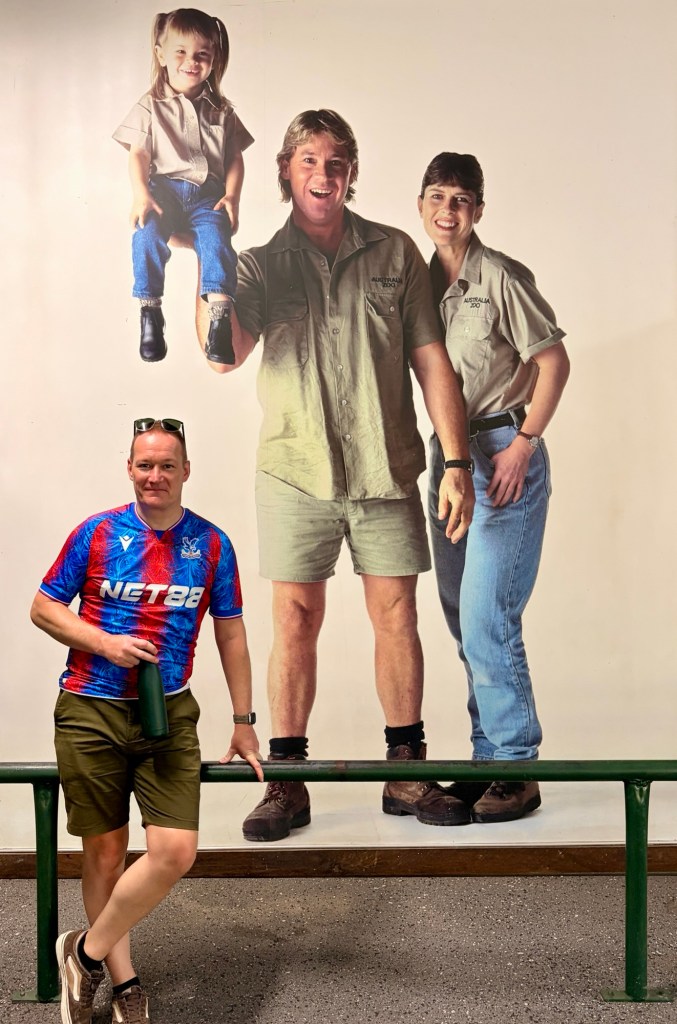
Walking through the zoo, it’s clear that education and conservation aren’t just side projects — they’re at the core of every exhibit. Interactive displays, signage, and keeper talks make learning accessible and fun for visitors of all ages.
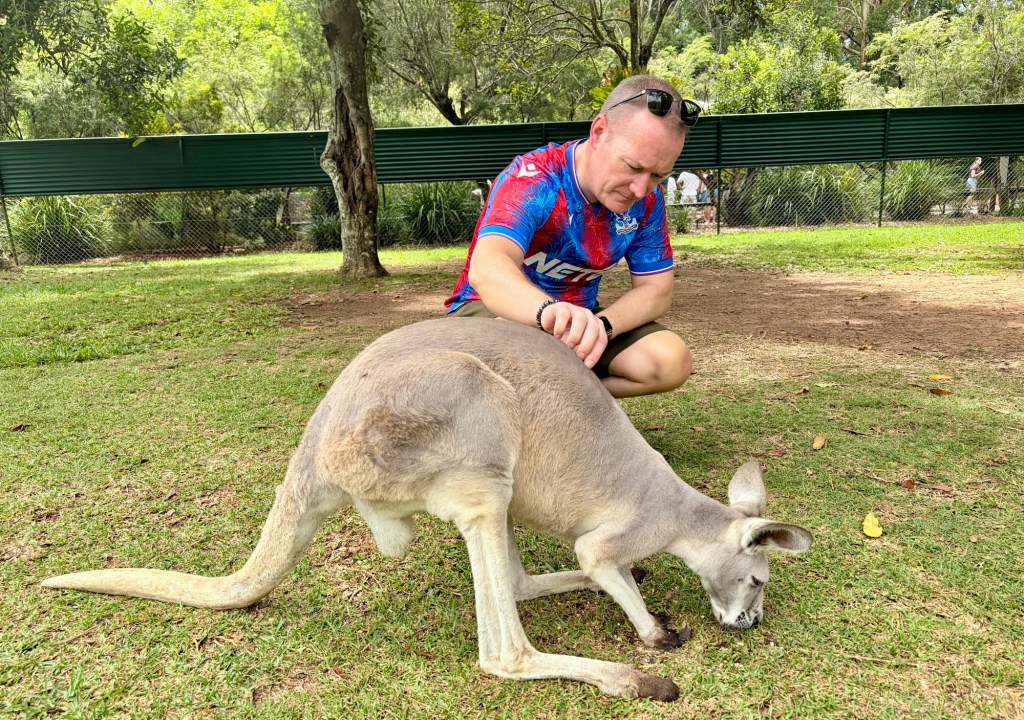
Exploring the Zoo
Australia Zoo spans a large area, with multiple precincts representing different habitats. From the Australian bush to tropical environments, every section provides an immersive experience.
Highlights included:
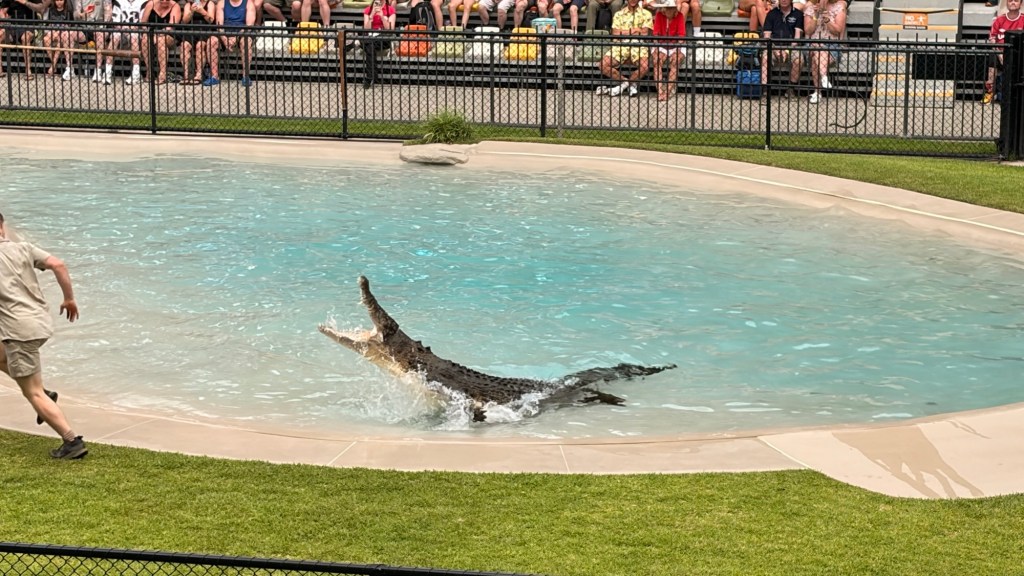
The Crocoseum: The iconic crocodile arena hosts thrilling demonstrations, showcasing the power and agility of these ancient reptiles. Our visit coincided with a show presented by Robert Irwin, who combined excitement with education, explaining the behaviour and conservation of these predators.
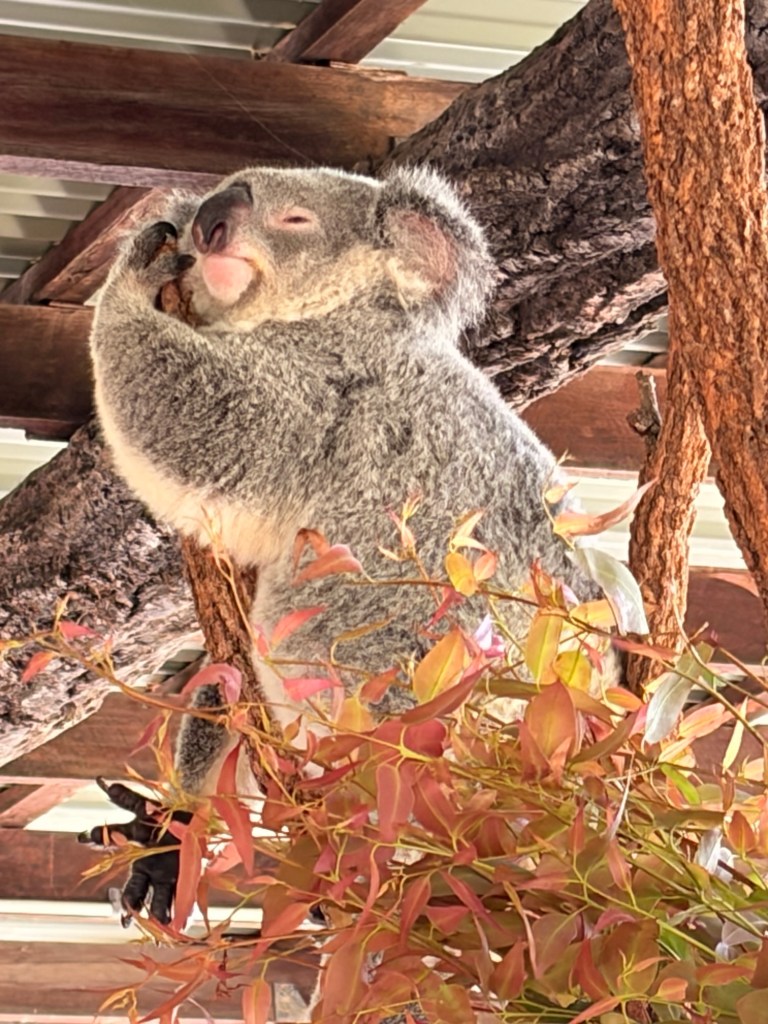
Koala Country: Walking among eucalyptus trees and seeing koalas up close is a reminder of why Australia Zoo is such a vital sanctuary for native wildlife.
Reptile and Mammal Walks: From wombats to snakes, each enclosure is designed with the animal’s welfare in mind, and staff are always on hand to answer questions and share interesting facts.

The zoo also offers special animal encounters, providing unforgettable, up-close experiences. One of the standout moments from our visit was the Komodo Dragon encounter. Spending time with Indah, one of the zoo’s most impressive Komodo Dragons and reportedly a favourite of Robert Irwin, was awe-inspiring. Watching her move with precision and learning about her feeding habits, conservation needs, and unique biology made it one of the most memorable experiences of the trip. It’s an encounter that highlights the zoo’s dedication to both education and animal welfare, allowing guests to engage with one of the world’s most remarkable reptiles safely and responsibly.
A Day Well Spent
After a full day exploring the exhibits, watching the shows, and enjoying both the Komodo Dragon encounter and other animal experiences, we made our way back to Noosa for a casual dinner at Betty’s Burgers, reflecting on the incredible experiences of the day. Spending time at Australia Zoo is not just about seeing animals — it’s about connecting with the passion and dedication behind their protection.
⸻
Brisbane: Waiting on the Weather
The next morning, we drove two hours south to Brisbane, closely watching updates on Tropical Cyclone Koji, which had already caused cancellations of the overnight sleeper train we were due to board.
A stay at The Westin Brisbane provided comfort and calm. Despite arriving at 10am, our room was ready — a reminder that hotel loyalty status does have its perks. While views were limited, the room itself was spacious and luxurious.

An afternoon exploring South Bank followed, including Streets Beach, a man-made lagoon right in the heart of the city. With the heat still high, it was the perfect place to cool off.
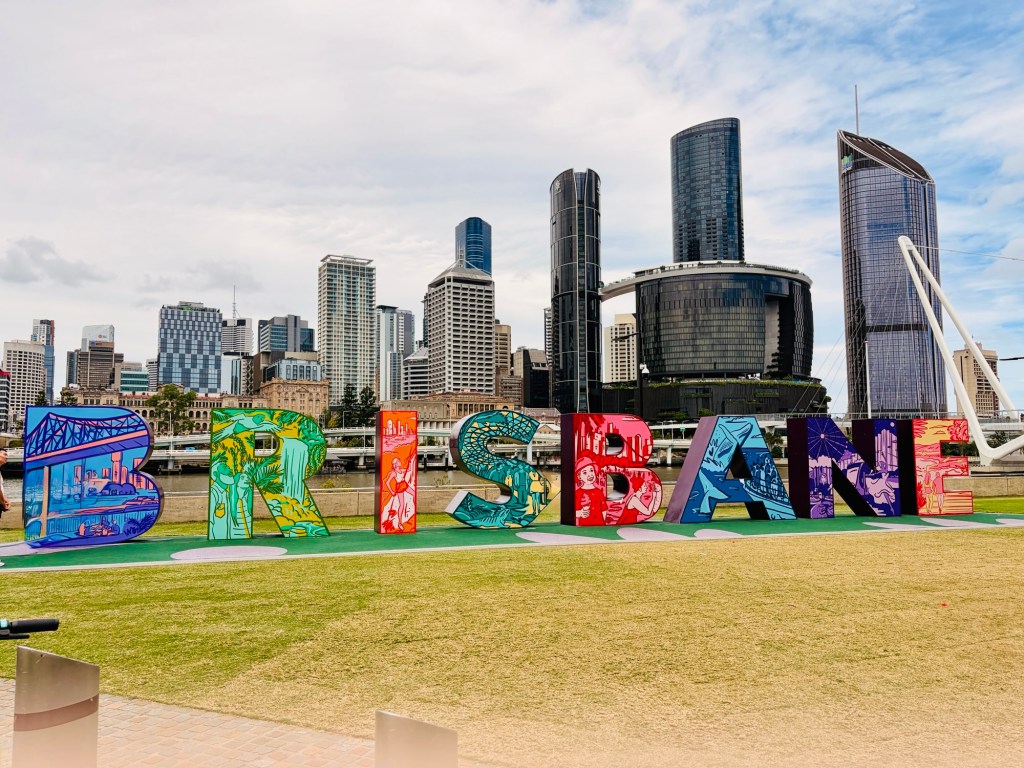
Back at the hotel, wine by the outdoor pool and evening drinks in the club lounge rounded off the day. It hadn’t even been a week since landing in Sydney, yet it felt like we’d already lived several trips.
Now, all that remained was to hope the overnight sleeper train north would depart as planned.
⸻
To be continued…
Follow the rest of the journey below




 manchesterfoodtourist.com
Leave a Reply